Starship Command
Designing a Relational Database for a Text-Based Adventure Game
Context
I wanted to explore how relational databases could support interactive applications beyond traditional business systems. By choosing a text-based adventure game, our team translated gameplay mechanics into a normalized schema, enforced rules through database logic and created an extensible foundation for future features.
What does it take to turn a text-based adventure game into a database-driven application?
A game requires persistent state, relationships between entities and rules governing how players interact with the game world. This project explored whether those requirements could be modeled and managed directly within SQL Server while maintaining a structured and extensible relational design.
Approach
This project designed and implemented a normalized SQL Server database to represent the game world, manage relationships between entities and enforce gameplay rules. Stored procedures exposed gameplay operations while database triggers handled validation and audit logging, creating a database-driven backend for the text-based adventure.
Data Sources
Custom Relational Database
A purpose-built game world containing locations, players, items, inventory, movement paths and gameplay events modeled specifically for a text-based adventure game.
Solution
Designed a normalized relational database representing the game world.
Implemented gameplay through T-SQL stored procedures rather than direct table access.
Used database triggers to centralize validation and automate audit logging.
Created reusable deployment scripts for schema creation and data initialization.
Built a playable backend supporting player movement, inventory management and game completion.
Designed the schema to be easily extended with additional locations, items and gameplay mechanics.
Architecture
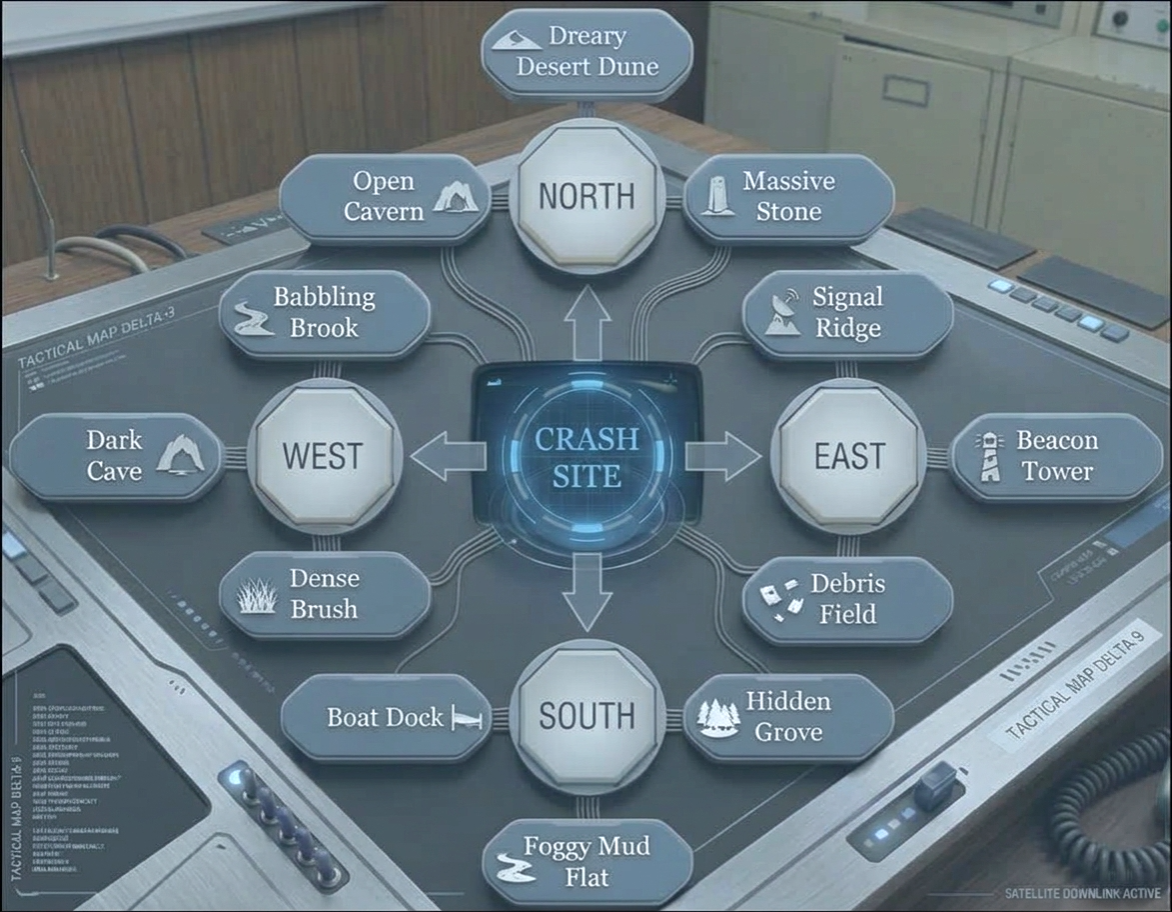
The game world is represented through a normalized relational schema that connects locations, players, inventory, items and gameplay events through defined relationships and constraints. T-SQL stored procedures provide controlled gameplay operations, while database triggers enforce validation rules and record player activity through audit logging. This structure centralizes database logic while keeping the game world extensible.
- 01Normalized relational schema
- 02Entity-relationship model
- 03Foreign key relationships and constraints
- 04T-SQL stored procedures
- 05Database triggers and validation
- 06Audit logging
Outcome
Successfully delivered a functional database-driven game backend supporting player navigation, inventory management and rule-based gameplay. The project demonstrated how relational database design can extend beyond traditional business applications to manage application state, relationships and business logic within an interactive software system.
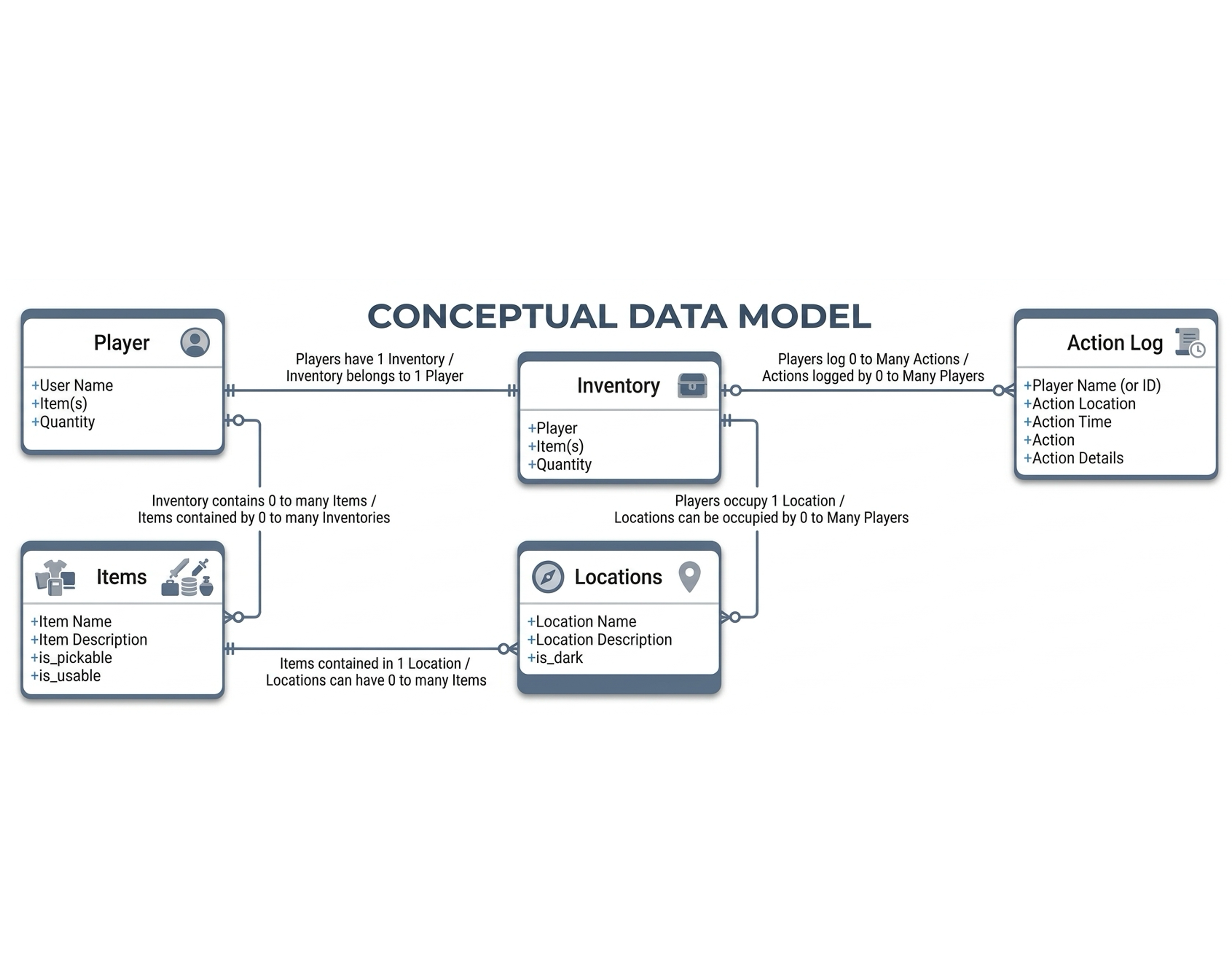
Conceptual Data Model
Conceptual model illustrating the core game entities, relationships and gameplay requirements.
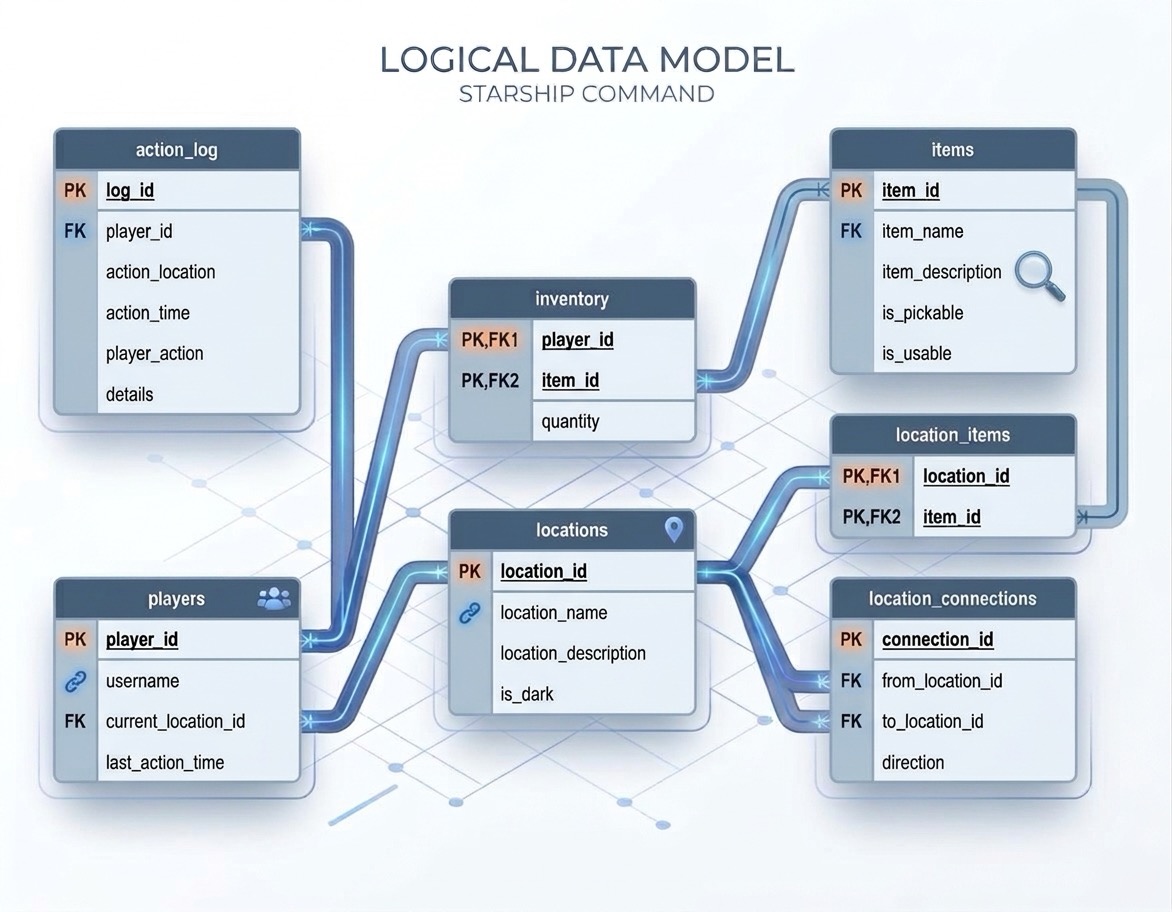
Logical Data Model
Normalized logical database design defining entities, keys, relationships and constraints.
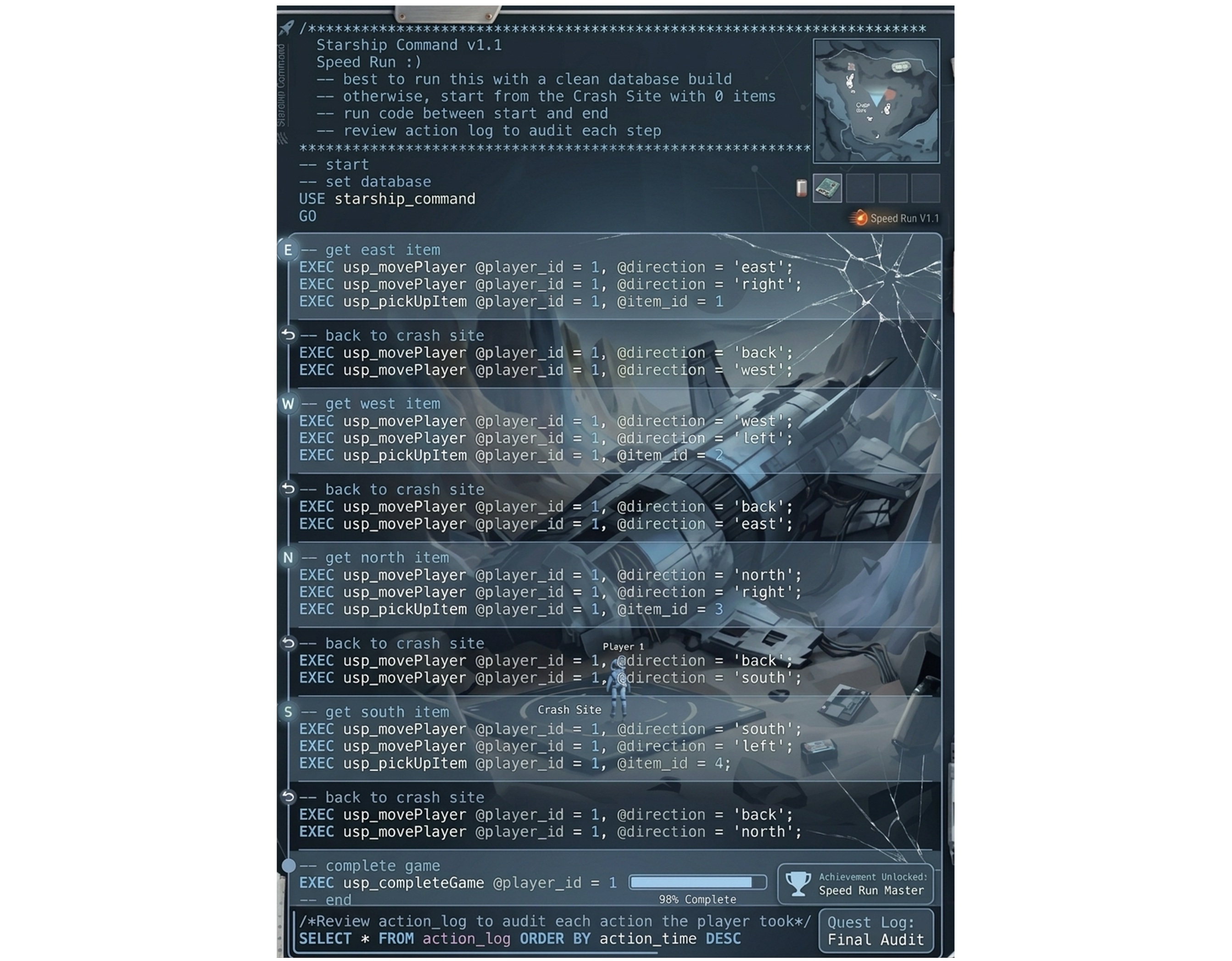
Gameplay Procedures
T-SQL stored procedure implementing a controlled gameplay operation through the database.
Lessons Learned
Translating conceptual requirements into normalized database structures.
Balancing flexibility with simplicity when designing schemas.
Centralizing business logic improves maintainability.
Iterative database design leads to cleaner and more extensible solutions.
Collaboration and version control are essential for shared database projects.
Future Improvements
Build a Flask web interface.
Expand the game world.
Introduce NPC interactions.