Technical Portfolio
Designing a Content-Driven Architecture for a Modern Technical Portfolio

Context
I wanted to build a portfolio that does more than present completed work. The site itself should demonstrate thoughtful product design, software engineering, technical communication and an ability to translate complex technical work into accessible narratives.
How can a technical portfolio communicate complex data, AI and engineering work while remaining clear, maintainable and visually coherent?
Technical projects often require significant context to explain the problem, architecture, implementation and results. The challenge is to create a portfolio that communicates enough technical depth to be meaningful while remaining accessible, visually consistent and flexible enough to evolve as new projects are added.
Approach
I designed the portfolio as a content-driven Astro application, separating structured project content from presentation through Astro content collections, reusable components and schema validation. The project architecture allows different types of technical work to share a consistent presentation while selectively exposing the sections relevant to each project. The visual system emphasizes restrained design, responsive layouts, technical diagrams and concise project narratives.
Solution
Built a reusable project architecture using Astro content collections and schema validation.
Structured project content in Markdown and YAML to separate content from presentation.
Developed reusable components for project heroes, stories, architecture diagrams, visualizations, resources and technology tags.
Created a responsive visual system using Tailwind CSS and a consistent slate-based design language.
Integrated technical diagrams and project visualizations to communicate architecture, workflows and results.
Designed the content model to support different types of technical projects without requiring a separate page implementation for each.
Architecture
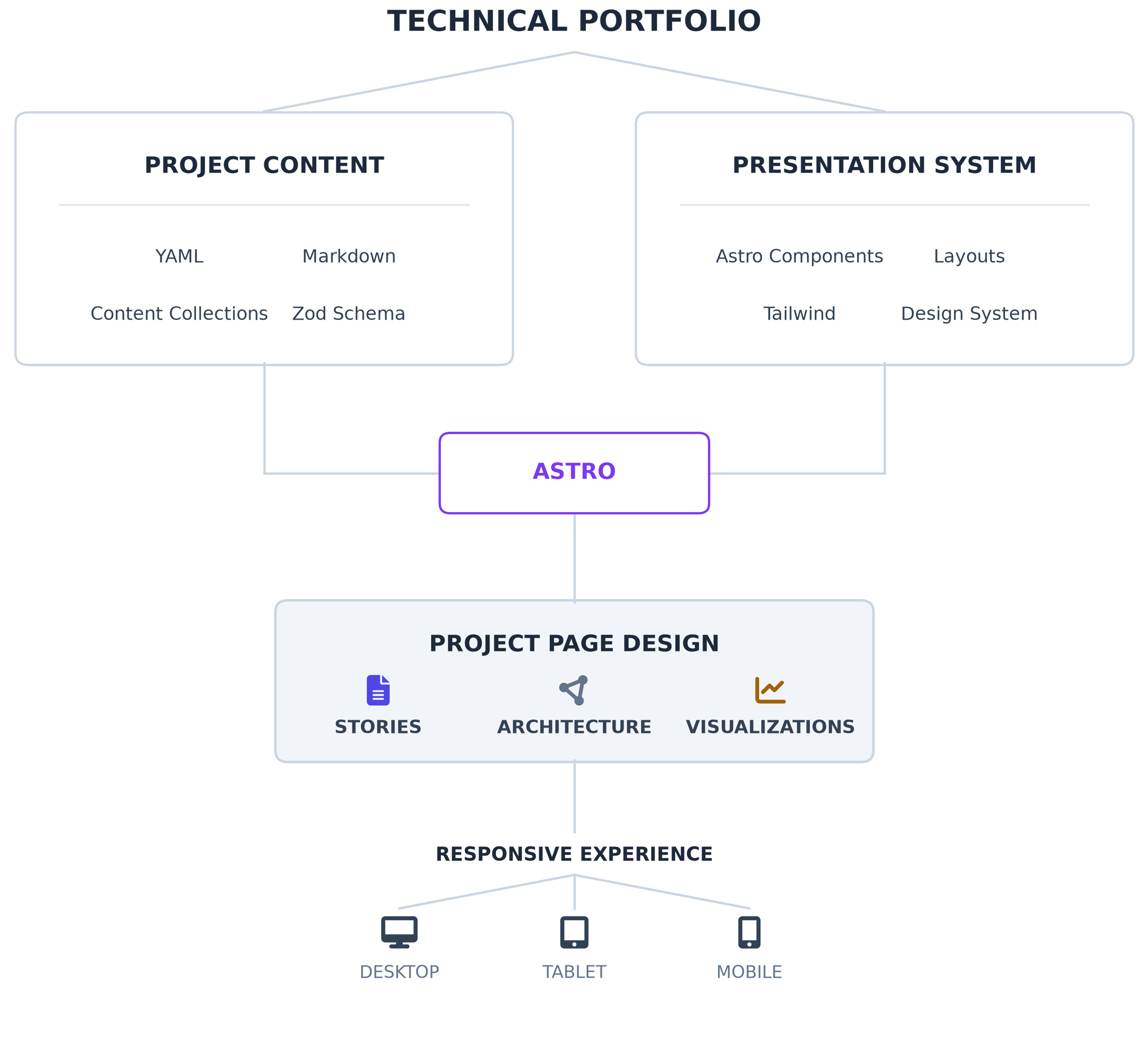
The portfolio uses Astro content collections to separate structured project content from reusable presentation components. Project Markdown files define the content while the Astro application controls layout, navigation, responsive behavior and visual presentation. The architecture allows project pages to share a common structure while selectively rendering sections based on the content provided by each project.
- 01Astro content collections with Zod schema validation
- 02Markdown and YAML project content
- 03Reusable project page components
- 04Tailwind CSS design system
- 05Responsive layouts and navigation
- 06Technical diagrams and project visualizations
- 07GitHub source control and Vercel deployment
Outcome
The portfolio evolved into a reusable, content-driven application that demonstrates both the technical work it presents and the engineering practices used to build it. Its structured content model, reusable components, responsive design system and integrated technical visualizations provide a foundation for continuing to add and refine projects without rebuilding the underlying page architecture.
Lessons Learned
A structured content model makes a growing portfolio easier to maintain and extend.
Reusable components allow improvements to the project experience to propagate across the portfolio.
Technical architecture and visualization can communicate complex ideas more effectively than text alone.
A portfolio can serve as both a presentation layer and a demonstration of software engineering practice.
Future Improvements
Continue refining the design system as new project types and visualizations are added.
Expand interactive technical visualizations where they improve understanding without adding unnecessary complexity.
Continue improving the content model as the portfolio evolves.